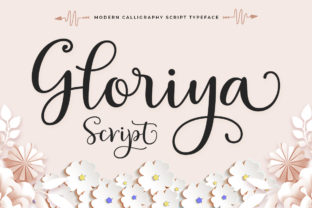
The Authentic Charm of Gloriya: A Designer's Guide
Finding a script font that feels genuinely human can be a challenge. Too many digital typefaces look stiff or overly perfect, lacking the warmth of real handwriting. Then you discover something like Gloriya, a sweet, soft hand-lettered script that immediately feels different. It doesn’t just mimic a handwritten style; it captures an authentic, fluid personality. This is the kind of premium font that becomes a go-to asset in a designer's toolkit, not just for its beauty, but for its ability to add a personal, crafted touch to any project. If you’re tired of generic lettering, understanding how to harness the character of Gloriya can transform your work from standard to standout.
Understanding the Visual Personality of Gloriya
At its core, Gloriya is a script font defined by its soft, flowing lines and natural rhythm. It avoids the harsh, angular connections sometimes found in other handwritten fonts. Instead, its strokes have a gentle, rounded quality, making it feel approachable and elegant without being overly formal. The baseline isn’t rigidly straight, which is a key detail—it mimics the slight variations you’d see in actual hand-lettering, giving it life and movement.
This typeface carries a distinctly feminine and romantic vibe. It’s perfect for projects that need to convey warmth, care, and authenticity. Think of the feeling you get from a handwritten note on beautiful stationery. Gloriya translates that feeling into the digital realm. Its alternates and ligatures are particularly noteworthy. These aren’t just decorative extras; they are essential tools for creating custom-looking letter combinations. By swapping out a standard ‘a’ for a stylistic alternate or connecting letters with a unique ligature, you can ensure that your typeset words look truly handcrafted, avoiding the repetitive patterns that can make digital script fonts look artificial.
Where Gloriya Truly Shines: Practical Applications
The versatility of a good script font is often underestimated. Gloriya isn’t just for one type of project; it’s a creative font that adapts beautifully across various mediums, both digital and print. Its strength lies in its ability to act as a focal point or a complementary accent, depending on the context.
Wedding and Event Stationery
This is the most natural home for a font like Gloriya. Its sweet, elegant character makes it ideal for wedding invitations, save-the-dates, and event programs. It sets a romantic and sophisticated tone from the first glance. Because it’s so legible at medium to large sizes, it works perfectly for names, headings, and key details on beautiful stationery. Pair it with a clean, simple sans serif font for the smaller body text to ensure all the logistical information remains easy to read.
Branding and Logo Design
For small businesses, especially those in the lifestyle, beauty, fashion, or artisanal food sectors, Gloriya can be a powerful tool for brand identity. It immediately communicates a hands-on, personal approach. A bakery, a boutique clothing line, or a handmade cosmetics brand could use this font in their logo design to signal quality and a personal touch. However, a word of caution: for logo design, always create custom letter connections using the provided alternates. A unique combination of letters will make the logo far more memorable and ownable.
Digital Content and Social Media
In the fast-scrolling world of social media, grabbing attention is key. Gloriya excels in creating eye-catching social media posts. Use it for pull quotes, inspirational phrases, or as a stylized header in Instagram graphics and Pinterest pins. Its softness provides a welcome visual break from the hard edges of typical sans serif text. For bloggers, it’s excellent for creating stylized section headers or signature graphics that add personality to a post, enhancing the overall editorial design.
Product Packaging and Labels
On a physical product, typography needs to do more than just look good; it needs to communicate. Gloriya is fantastic for packaging design where a handmade, artisanal quality is a selling point. Think jam jars, candle labels, or soap wrappers. Using this font for the product name can instantly convey that the item inside is crafted with care. Just be sure to test its legibility at the actual print size you intend to use.
Working With Gloriya: A Practical Guide
Simply installing a premium font isn’t enough. To get the most out of Gloriya, you need to use it thoughtfully. Here’s how to integrate it effectively into your design workflow.
Mastering Font Pairings
The golden rule for pairing a decorative script font is balance. Gloriya is expressive, so it needs a quiet partner. A simple, geometric sans serif font is almost always a winning combination. Fonts like Montserrat, Lato, or Open Sans provide a clean, modern counterpoint that ensures readability while letting Gloriya be the star. You could also pair it with a classic, elegant serif font like Garamond or Playfair Display for a more traditional, sophisticated feel, especially in editorial design or high-end branding.
Readability and Hierarchy
Use Gloriya as a display font—for headlines, short phrases, or single words that need to stand out. Its looping, connected nature makes it less suitable for long paragraphs of body copy, where a simpler typeface is necessary for comfortable reading. Think of it as the vocal soloist, not the entire choir. It commands attention in short bursts. A common mistake is overusing it. If every headline on a page is in Gloriya, its impact is diluted. Use it strategically to draw the eye to the most important message.
Leveraging Special Features
This is where Gloriya truly becomes a versatile design asset. The font is PUA encoded, which is a technical way of saying all those beautiful alternate characters and ligatures are easily accessible, even in basic design software. Don’t ignore these features.
- Ligatures: These are special characters that replace common letter pairs (like ‘th’, ‘er’, or ‘st’) with a more fluid, connected version. They make your text look more naturally handwritten.
- Alternate Glyphs: These are different versions of standard letters. Swapping out a capital ‘G’ or a lowercase ‘s’ for an alternate can completely change the feel of a word and prevent repetition in adjacent letters.
Take the time to explore the glyphs panel in your design software. Experimenting with these options is what will elevate your work from simply using a font to crafting a unique typographic statement.
Final Considerations
Before you commit, always test the font in the context of your specific project. How does it look in your chosen color palette? Is it legible against the background texture or image you’re using? And importantly, if your project is commercial, always double-check the font license to ensure it covers your intended use. A quality commercial font like Gloriya is an investment in your project's aesthetic and professionalism.
Ultimately, Gloriya is more than just another script font