Camelia Beauty: A Font That Whispers Elegance
There’s a particular kind of design challenge that calls for a typeface with personality, but not one that shouts. You need a font that conveys sophistication, warmth, and a touch of human craftsmanship without overwhelming the message. This is where a well-crafted script font like Camelia Beauty finds its purpose. It’s not just another handwritten font; it’s a premium font built on the foundations of classic Latin script, refined into a modern, monoline form.
The Anatomy of Elegance
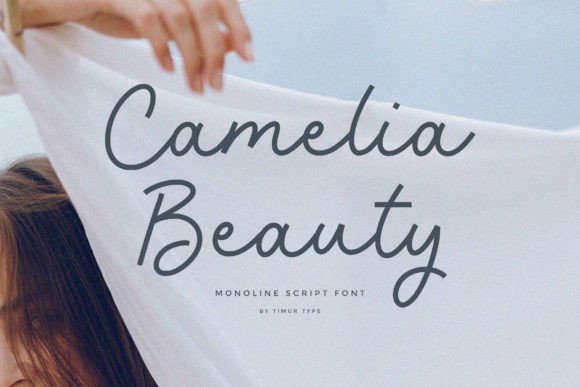
What sets Camelia Beauty apart from a crowded field of script fonts is its disciplined elegance. The term "monoline" is key here. Unlike fonts with dramatic thick-and-thin strokes that mimic a brush or nib, Camelia Beauty maintains a consistent stroke weight throughout each character. This creates a sense of visual calm and balance. The letters flow into one another with smooth, connected lines, avoiding the overly casual or chaotic look of some handwritten fonts. It’s a typeface that feels thoughtfully crafted, not hastily sketched.
The personality of Camelia Beauty is one of approachable refinement. It strikes a delicate balance. It has the personal touch of a script, suggesting a human hand behind the design, yet its clean lines and uniform weight give it a professional, polished finish. This makes it an incredibly versatile creative font. It doesn’t belong to a stark, minimalist modern typography category, nor is it a rustic, vintage script. Instead, it occupies a graceful middle ground—stylish, contemporary, and timeless all at once.
Where Camelia Beauty Truly Shines
Understanding a font’s character is one thing; knowing where to deploy it is another. The true value of Camelia Beauty lies in its application across a wide spectrum of projects. Its strength is in adding a layer of sophistication and personality where it’s needed most.
For brand identity and logo design, this font is a natural fit for businesses that want to communicate elegance, care, and a personal touch. Think boutique hotels, wedding planners, artisan bakeries, high-end skincare brands, or independent jewelry designers. Used as a primary wordmark or as a supporting display font, Camelia Beauty can instantly elevate a brand’s perception. It tells customers that attention to detail matters here.
In packaging design, its role is critical. On a label for a gourmet food product, a bottle of artisanal perfume, or a box of luxury chocolates, Camelia Beauty can convey quality and craftsmanship. Its readability at larger sizes ensures the product name or a key descriptor stands out beautifully on a shelf or in a photograph.
The digital space is another prime environment. For web design, Camelia Beauty works exceptionally well in controlled doses. It’s perfect for hero section headlines, pull quotes, or special announcement banners where you need to draw the eye and set a tone. It should be used sparingly in body copy, where a clean sans serif font or serif font would ensure readability. Similarly, in social media graphics, it can make a post for a special promotion, a testimonial, or a holiday greeting feel more premium and engaging.
For editorial design and publishing, consider it for magazine headlines, chapter titles in a book, or the cover of a lifestyle publication. It adds a layer of artistic flair that a standard display typeface might lack. Crafters and hobbyists will also find it invaluable for creating personalized items—greeting cards, wedding invitations, custom quotes for framing, and digital planners. It’s a true workhorse among design assets.
Making the Most of Your Design Asset
Choosing a font is just the first step. Using it effectively is what separates good design from great design. Here’s some practical guidance for working with Camelia Beauty.
Evaluate the Fit: Before you commit, ask yourself if the font’s personality aligns with your project’s goals. Camelia Beauty suggests elegance, femininity, and care. If your project’s voice is rugged, industrial, or hyper-masculine, it might not be the right tool. For a wedding invitation, it’s perfect. For a construction company brochure, you’d likely look elsewhere.
Master the Font Pairing: This is perhaps the most crucial skill. A script font like Camelia Beauty rarely works well in isolation for body text. Its strength is in headlines and accents. Pair it with a highly legible, neutral typeface. A classic sans serif font like Lato, Open Sans, or Montserrat creates a beautiful, modern contrast. Alternatively, a traditional serif font like Garamond or Playfair Display can create a more classic, editorial feel. The key is contrast in style and consistency in mood.
Test for Readability: Always test the font at the size and in the context where it will be used. While Camelia Beauty’s clean monoline structure aids readability compared to more complex scripts, it’s still a display font. Ensure that any text set in it—especially in logos or headlines—is immediately legible to your audience. Zoom out, view it on a mobile screen, and print a sample if possible.
Review What’s Included: A premium font often comes with more than just the basic A-Z. Check for OpenType features. Does it include stylistic alternates? Swashes? Ligatures? These extras can provide valuable design flexibility, allowing you to customize the look for specific words or initials, making your work even more unique.
Understand the License: As a commercial font, Camelia Beauty will come with a license. Read it carefully. Most licenses cover specific uses (e.g., a certain number of users, a specific number of prints, or use on a single website). Ensure your intended use—whether for a client’s logo, a product line, or a social media campaign—is covered. This protects you and respects the work of the font’s creator.
In the end, a typeface like Camelia Beauty is more than just a collection of letters; it’s a design partner. It brings a specific voice to the table—elegant, refined, and human. When chosen thoughtfully and used with an understanding of its strengths, it can transform a simple project into something memorable, helping you build a stronger connection with your audience and elevate your creative work to a new level of professionalism and style.